
Breakups & VC
Show me the returns!

We fall in love with people because of the contexts for which we get to know them. It’s the way they exist in different environments – how they treat the server, or how they flip to the next page of the book they’re reading. It’s our perception of how they carry themselves in the world that makes us swoon. There eventually comes a tipping point as feelings develop, where the intention behind the two strangers (or friends) spending time with one another begins to crystalize into something more intimate. The transition features an emotionally involved conversation about mutual commitment, leading to an explicit promise, and a set of implicit expectations. Then, there’s this false notion that the relationship has gained more clarity, when really, the emotions involved are about to become increasingly non-linear. Once they’re there, an abrupt discontinuity, where these memories and emotions are suddenly shoved into a box, locked up, and dismissed, is incredibly destabilizing. Breakups are a complex form of grief, where there isn’t a particularly formalized way that can help you cope. When someone dies, we send flowers and attend funerals. But when a relationship ends, we’re forced to face the reality of someone still existing in the world, but no longer being a part of ours. Then, there’s no choice but to allow the natural course of emotional processing to unfold – where the sine wave of sadness oscillates at varied amplitudes, and time seems to be the only variable that can lead y to zero.
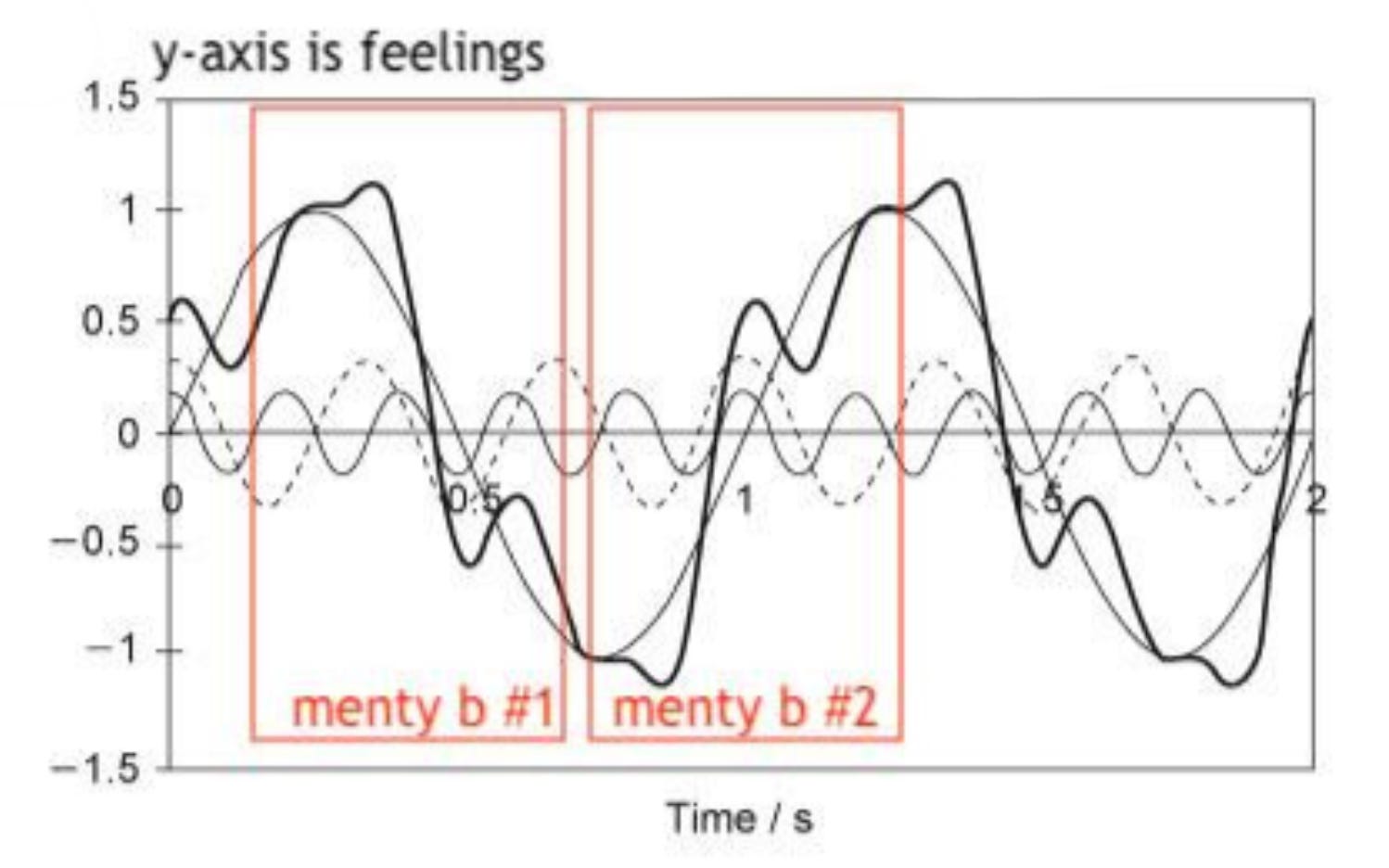
There’s a lot of bullshit that happens after the breakup, too. I would be kidding myself if I didn’t admit that in the past, I’ve had no choice but to delete a handful of shared playlist and suddenly, as I lay on my bed and flip through a mutual friend’s instagram story, I jump through a series of digital hoops to uncover the shocking reality that I’ve been blocked on instagram. The decision for discontinuity has cut through, slicing my heart into two, like the sharp tip of a ballpoint pen that signed at the dotted line. It sorts out any confusion that may have been lingering, because now, the terms of the agreement have been breached. The contract is terminated, and both parties that were once held accountable to follow through on the deal, have no choice but to experience the excruciating pain that comes with breaking these promises.
Personally, I have a track record of being susceptible to falling in love, but my heartbreak hasn’t been limited to romantic relationships. I’d fall in love easily–with ideas, too. In my senior-year of high school, the boy who sat next to me in calculus really hated that I got better grades than him. I know that for a fact, because every time we’d get a quiz back, he’d peer over my shoulder, and mutter profanities under his breath. This was true for the most part, until the day I got a 73 on one of our quizzes, and he got an 82. As expected, I didn’t hear the end of it. I remember running down the hall to shove what felt like the stupidest sheet of paper in the world into my locker, and crying in the bathroom before my third period class. I couldn’t stop thinking about this for weeks. I was so obsessed with the idea of my experience following one particular path–I was so head over heels with perfect results, that I had developed an unreasonable rigidity towards it all. I was totally convinced that a single grade would prevent me from getting into my dream university. Oh, to be young, dumb and in love.
It wasn’t until only recently where I started noticing the harm in putting all your eggs in one basket. I’d spend hours on the phone with my coworker–an ex-Wall Street banker that managed hedge funds in his thirties. “Never fall in love with your investments,” he’d always say. We’d discuss the product-market-fit of what I had spent the past 5 years of my life working on, trying to understand why it’s not sticking. The only thing that was missing, I’ve realized, was the capacity to understand that detaching oneself from the desired outcome is ironically what leads you closer to it.
One may argue that the missing virtue was patience. I only partially agree – there’s a misconception about there being humility in sticking with something even if you know it might not work out. The payoff for being patient is largely dependent on the other traits that may be involved in sticking something through. For instance, people-pleasing tendencies can make overdoing patience rather easy, as it likely involves compromising one’s own boundaries. For me, establishing this balance has been challenging, and on top of that, I’m stubborn, and I really don’t like giving up. Historically, I’ve found it difficult to walk away from things I’ve tried so hard for: my first ever relationship lasted six years, and my first ever job out of grad school, about five. Both of which I knew weren’t working long before I pulled the plug. For the longest time, my mental schema followed the narrative that these things took longer than they were supposed to. With a constant fear of having allowed time, what I find to be our most valuable resource, to slip at my fingertips, I couldn’t stop asking myself: “What’s that thing about the definition of insanity involving making the same mistake over and over and expecting different results?”
Then I remind myself–assessing risk during life decisions is a lot less intuitive than segmenting stocks and bonds to diversify an investment portfolio. There’s a reason why venture capitalists are almost always bad at their job. The success of their investments are directly tied to market trends–they become more or less lucrative based on circumstantial changes. There’s no option of being avoidant to the market when your livelihood depends on it. Conversely, when we’ve invested a significant amount of energy into a relationship, avoidance is what keeps us comfortable. Walking away doesn’t feel like much of a possibility, because we’re somehow self-indulgent enough to believe that if we stick to it, we can fix every issue. There’s just too much ego involved in it all to fully detach. Despite all this, there’s a point where philosophies around finance and romantic relationships converge–both involve a change in the outcome when there’s a shift in context. These investments exist in an ever-changing landscape–whether that landscape be the market or your identity. That, and when these investments fail, both venture capitalists and people suffering from heartbreak still have to go into work the next day.
Accepting my feelings around how long it took me to finally part ways with each endeavor happened in three phases. The first involved blaming myself for how long it took to realize it wasn’t working. The second involved blaming myself for not doing something about it earlier. The third involved rigorous radical acceptance to get over the fact that things take as long as they’re supposed to take, and that we fall in love with people and ideas based on the context for which we get to know them. Through all three phases, I kept trying to remind myself of these words: “When you look back on a failed relationship you often wonder how it could have gone on for so long. For months, you knew it wasn’t working. Why didn’t you get out before it became an irrevocable disaster? The answer is simple: because it needed to end in catastrophe. You needed to poison the well and bludgeon your heart beyond repair. You need to exhaust all your reserves. Anything less, and you’d still be holding out hope. You can always muddle along from minor disaster to minor disaster, but it takes truly heroic stamina to see things through to total catastrophe.” Andrew Boyd, Daily Afflictions
There’s a reason that time is our most valuable resource – it’s a necessary vessel that helps us gather the required information that can eventually lead to decisions that can get us to a fuller life. The way we use the information that we gain through time is a valuable indicator of how we can move with this ever-changing landscape. Even if successful VC bros have the foresight to look into the future and the conviction that an idea is going to work, a necessary part of their success is reliant on their adaptability to change. The sunk cost fallacy deludes us into believing that patience and perseverance are virtues, and that if we try hard enough, we can somehow alter the trajectory of things that are ultimately out of our control. The irony about falling deeply in love with people and ideas is that this relentless attachment actually stems from a place of fear – fear of letting go or admitting defeat. Paying attention to new information, and identifying the changes in context becomes our most powerful tool to know when to let go. It’s about having the guts to walk away, all while the same guts feel like they’re being violently ripped out of your stomach, as you drive back home, after sheepishly exchanging each others belongings, with an unspoken acknowledgment that for the next little while, as you both slip into a new context of existence, you’re forced to pretend the other is dead. All that, and you’re still expected to go into work tomorrow. Godspeed.
Love u this was a beautiful read